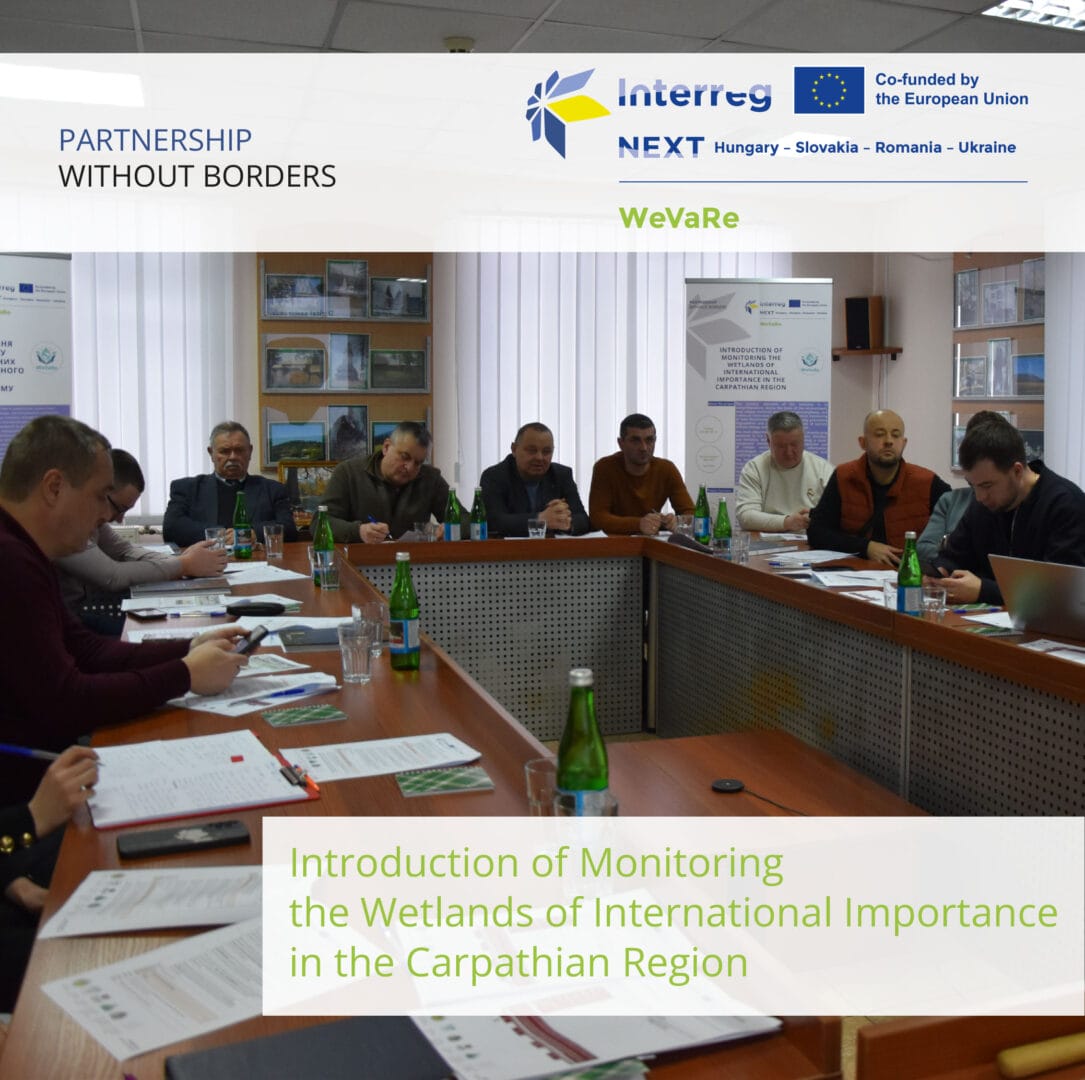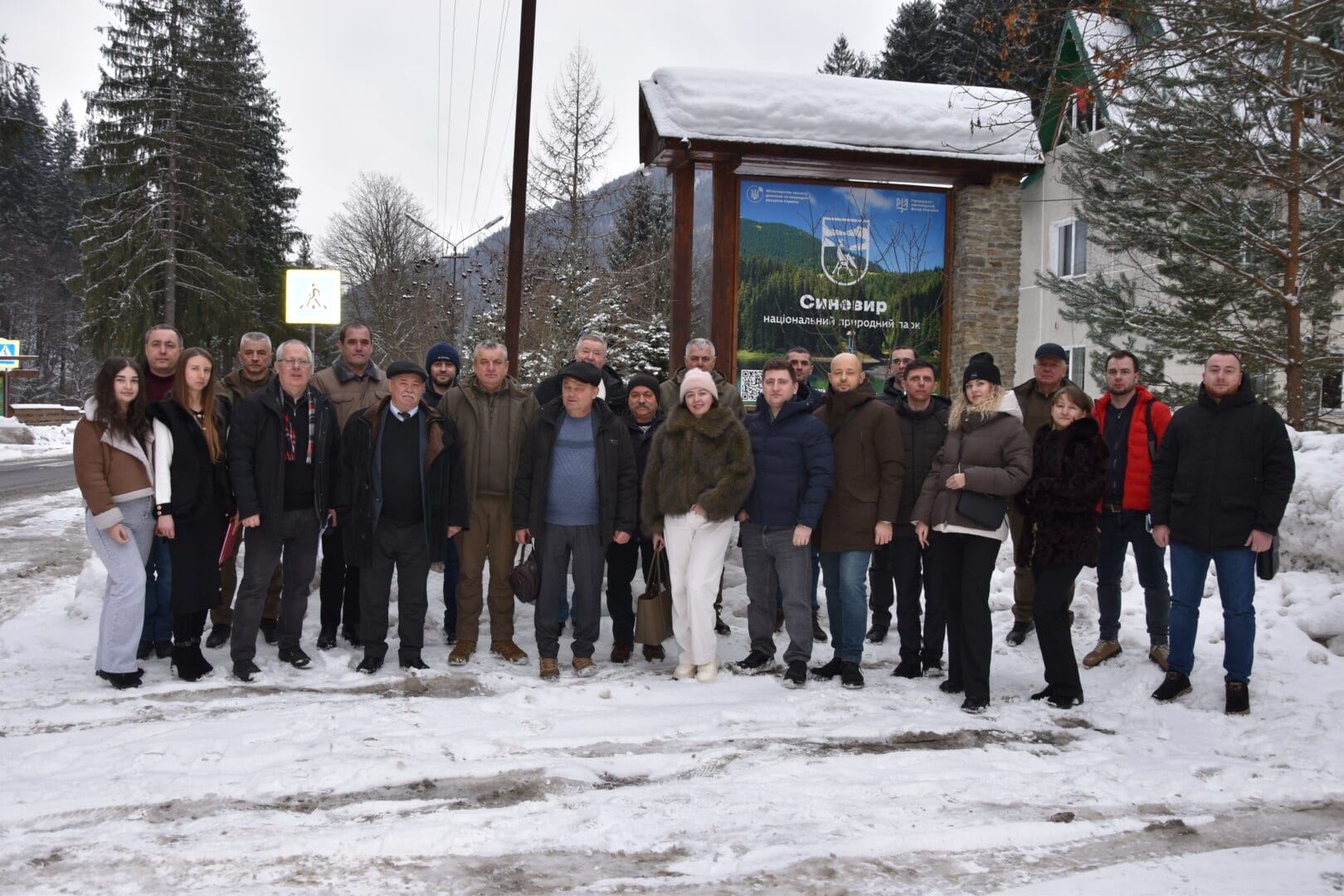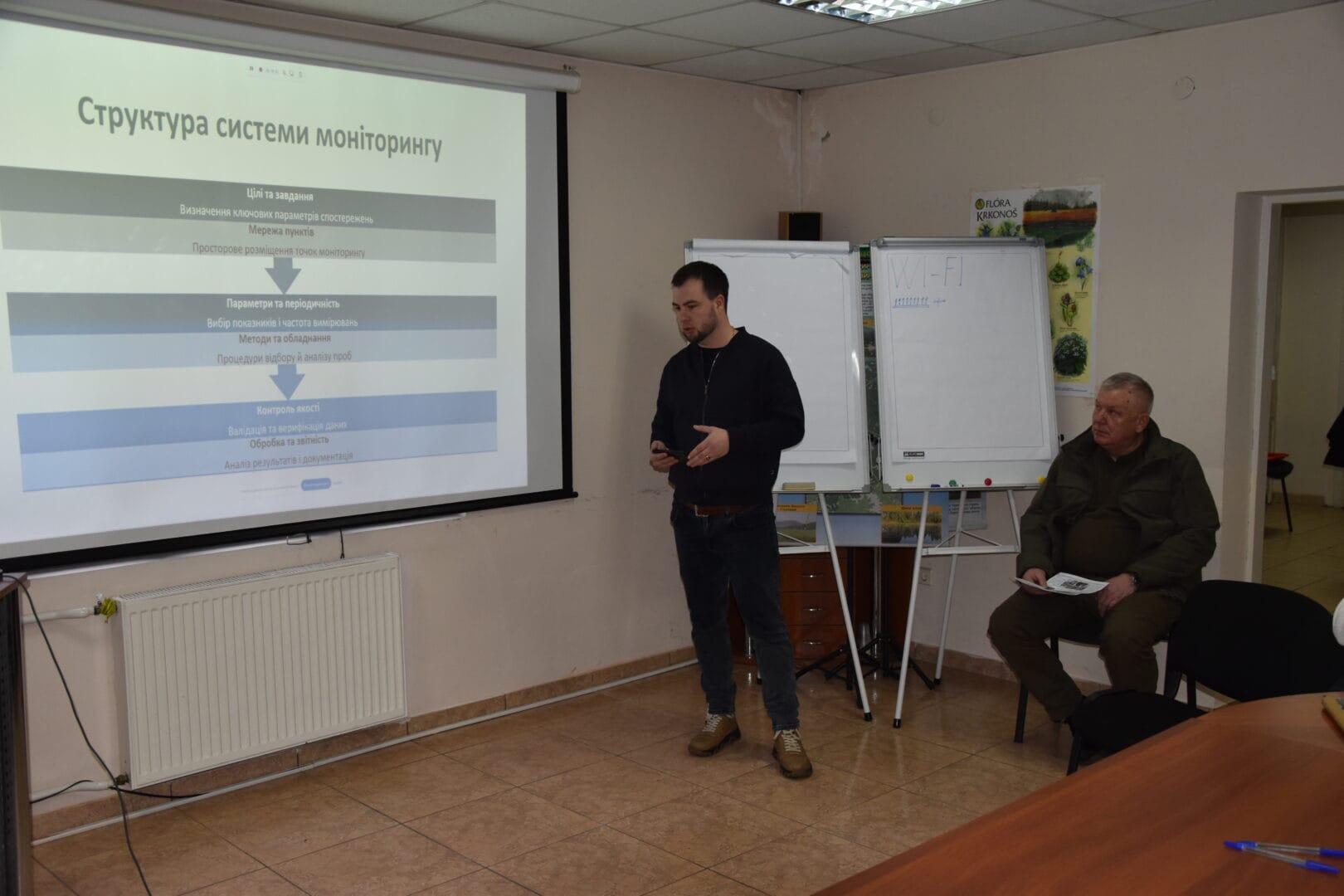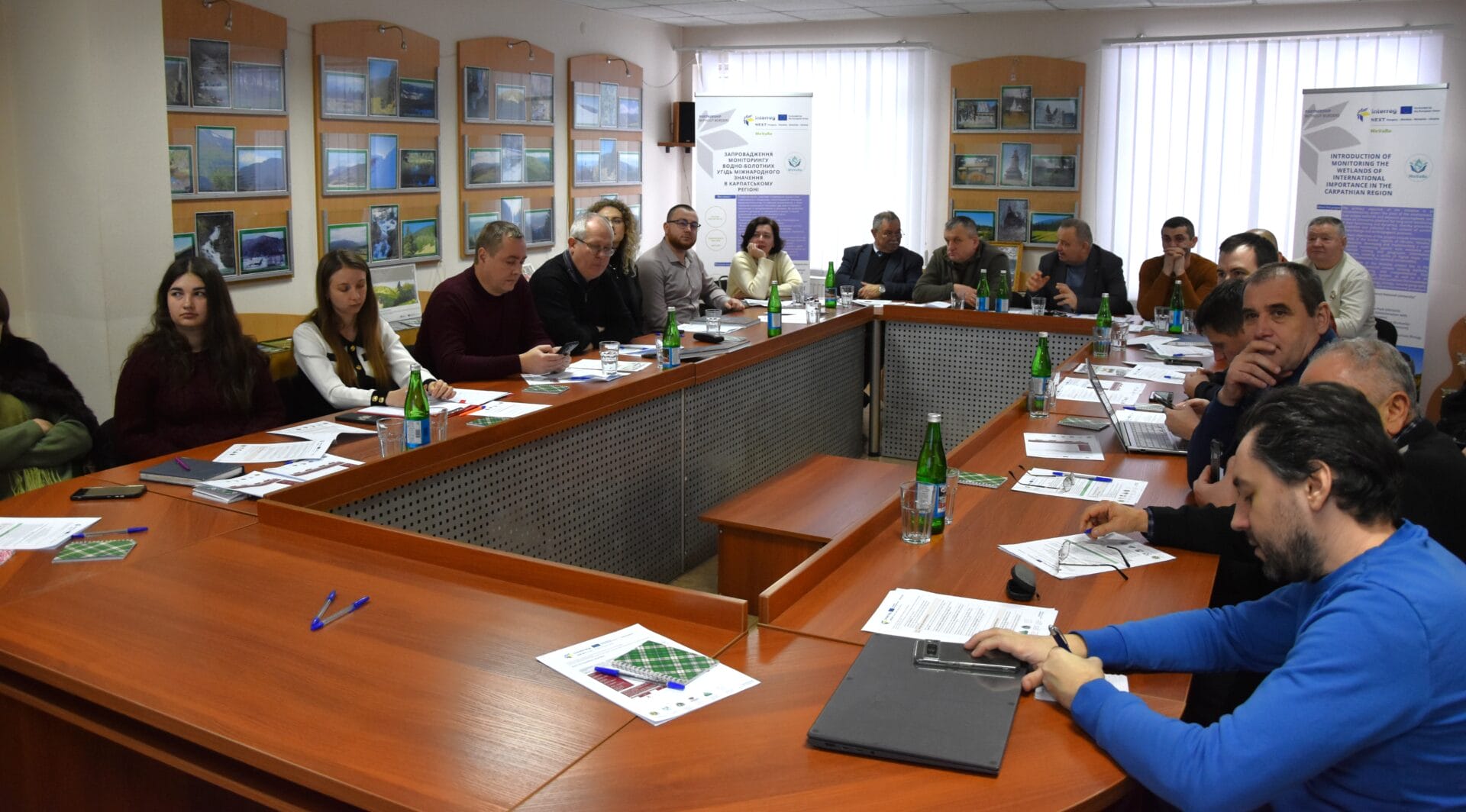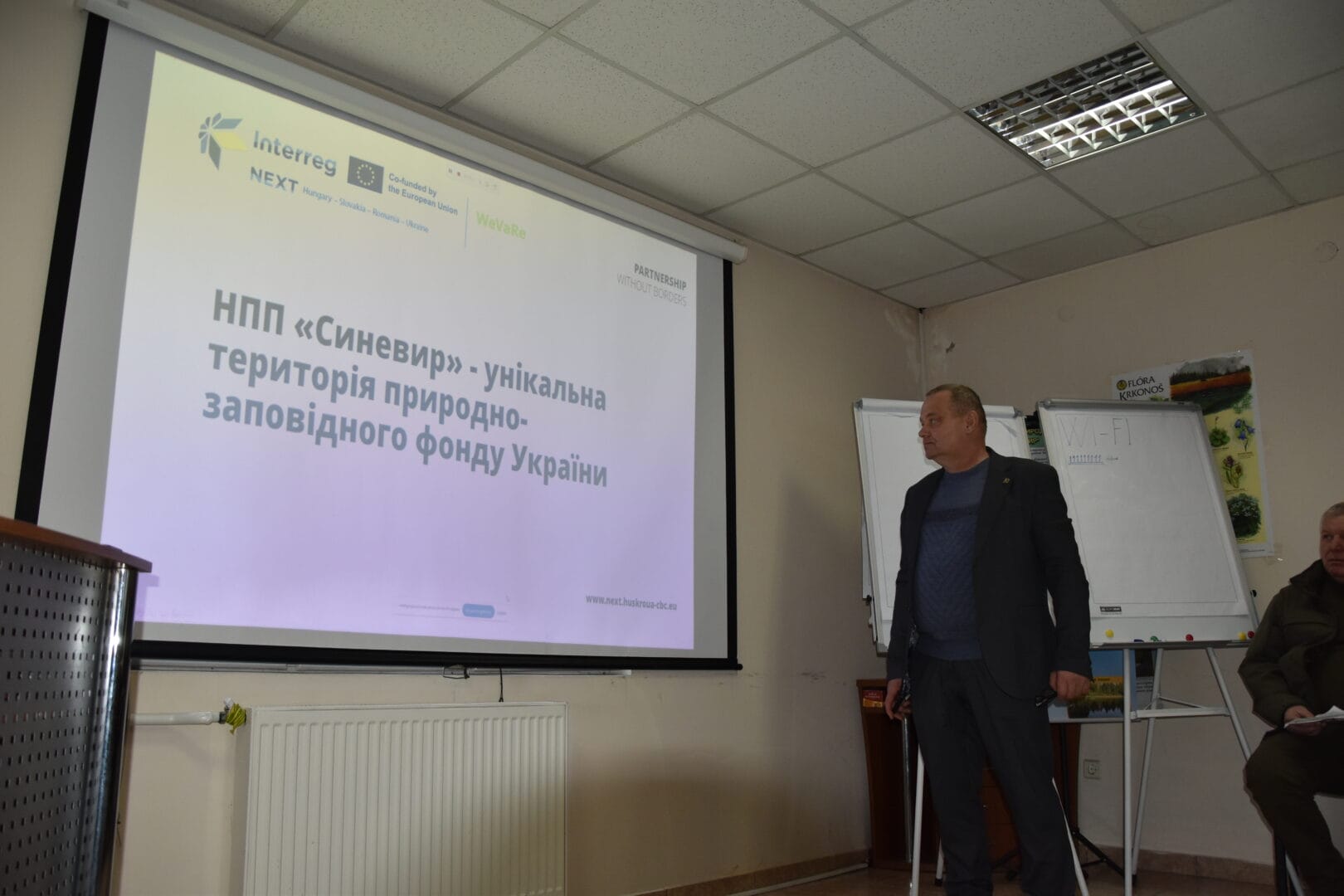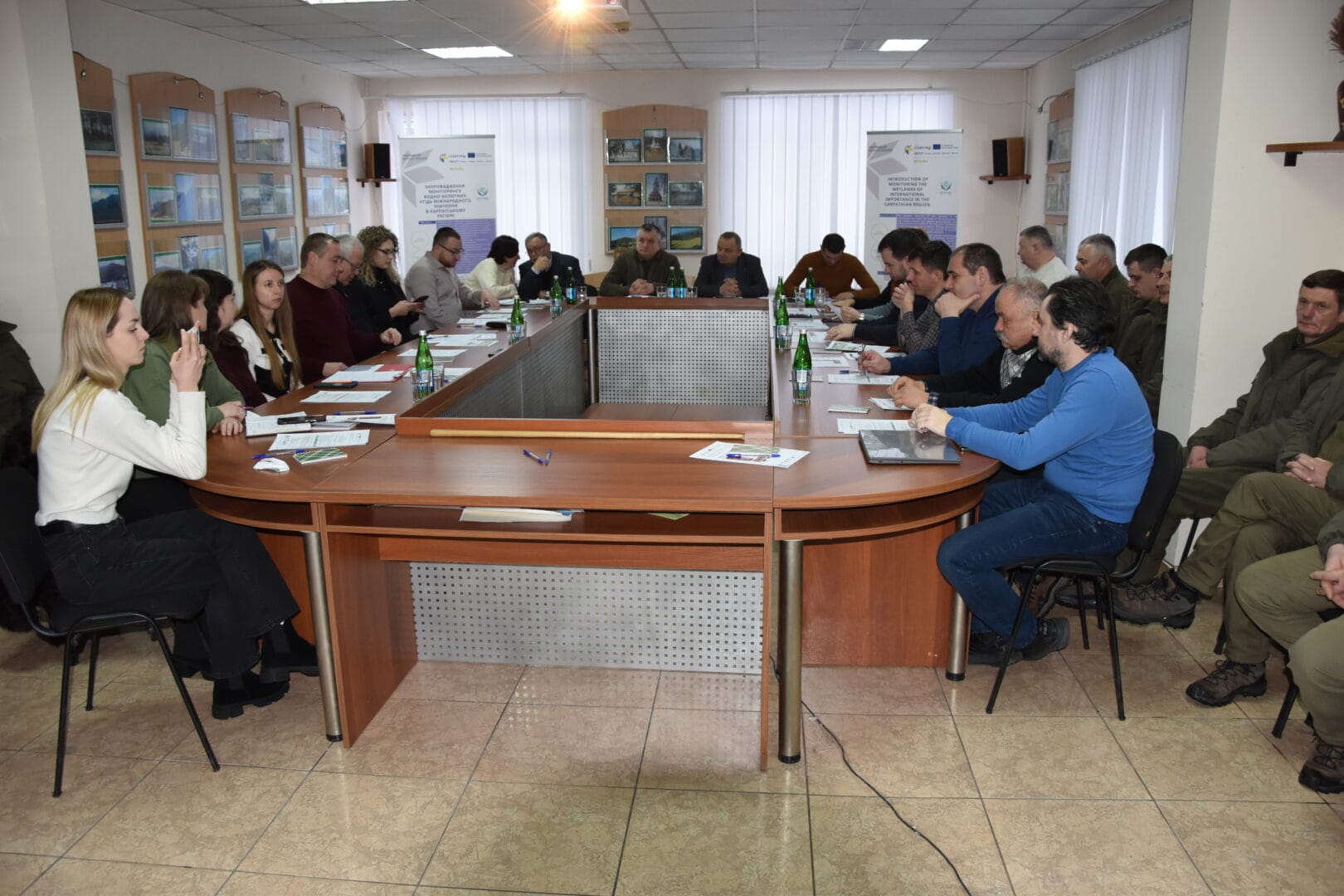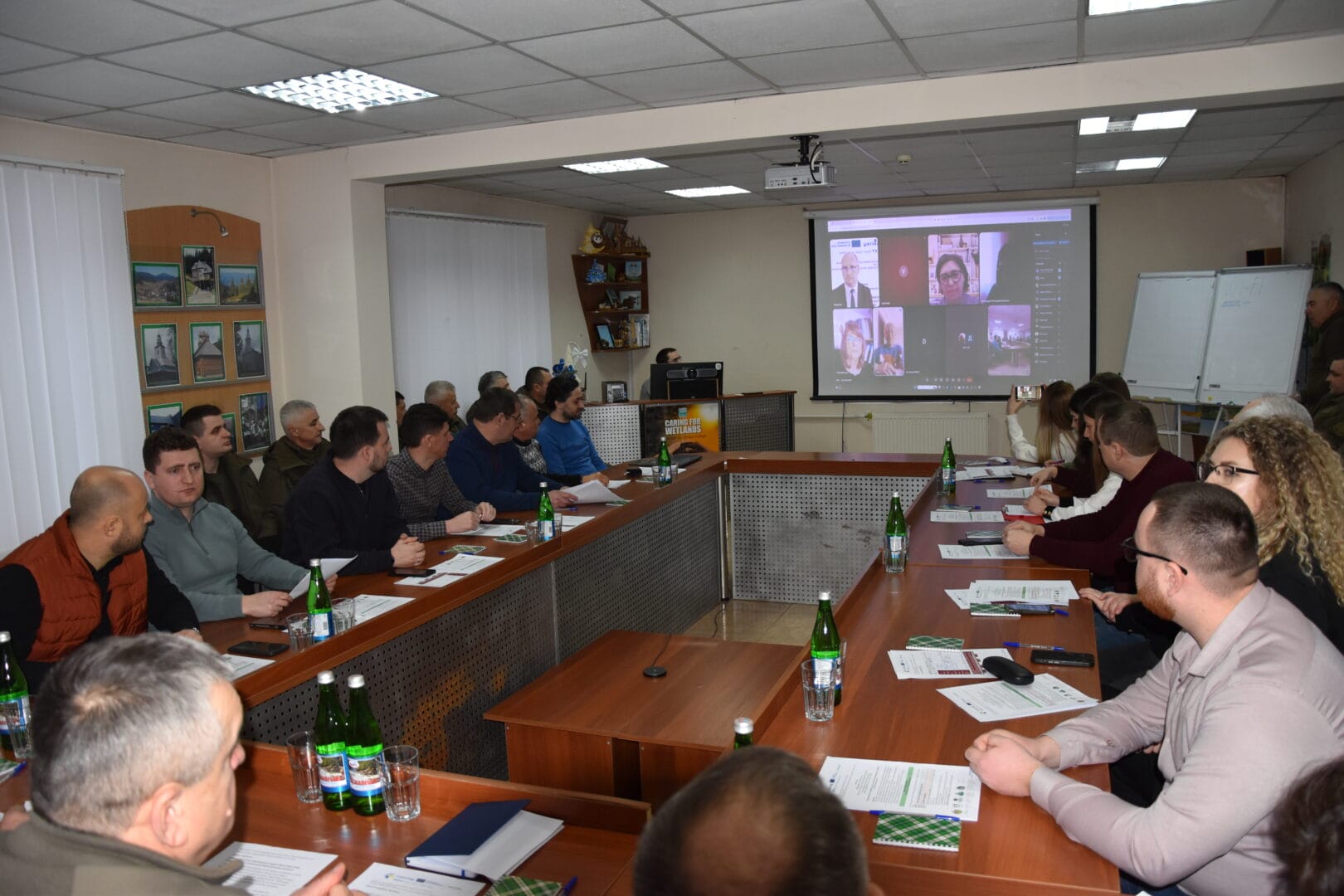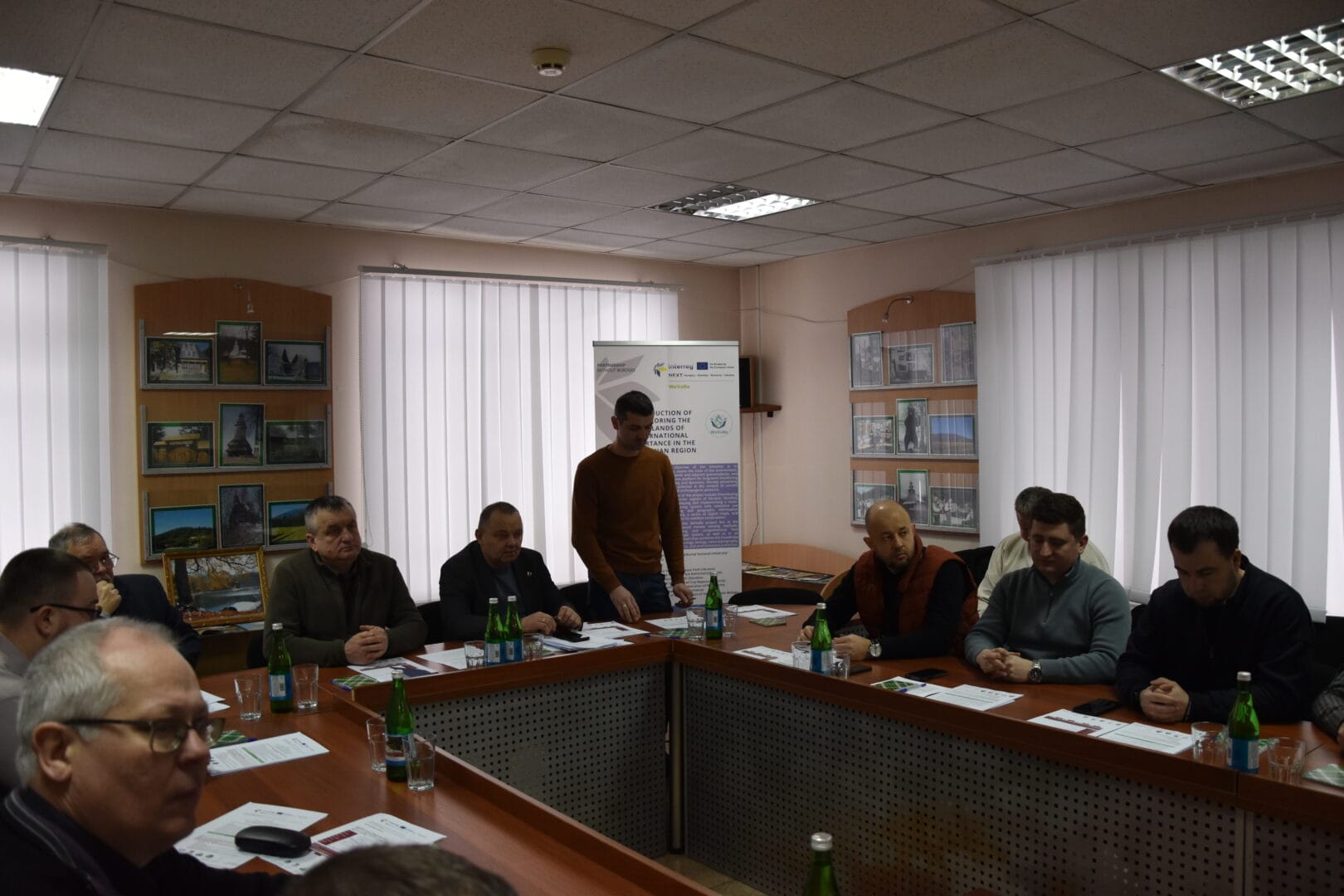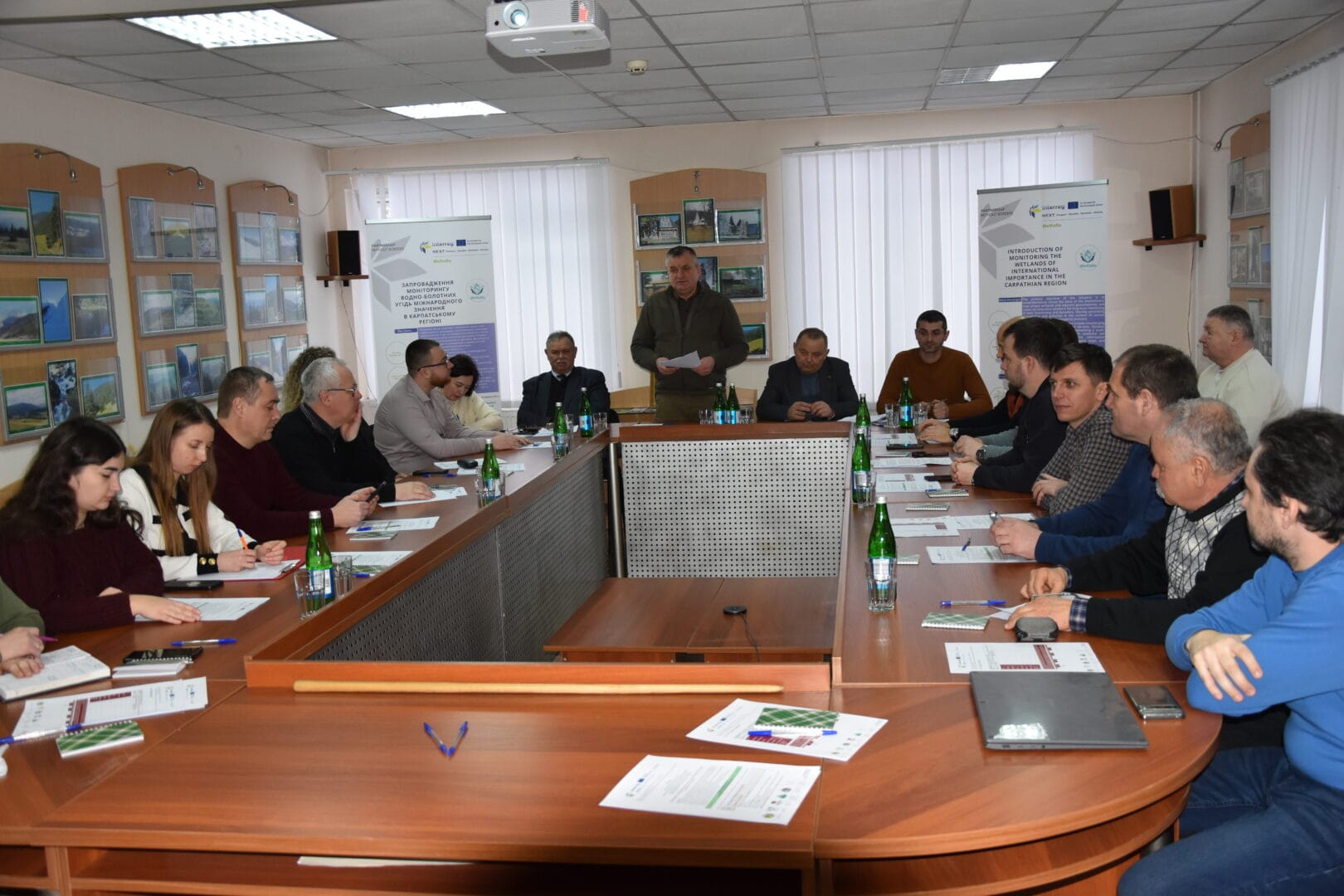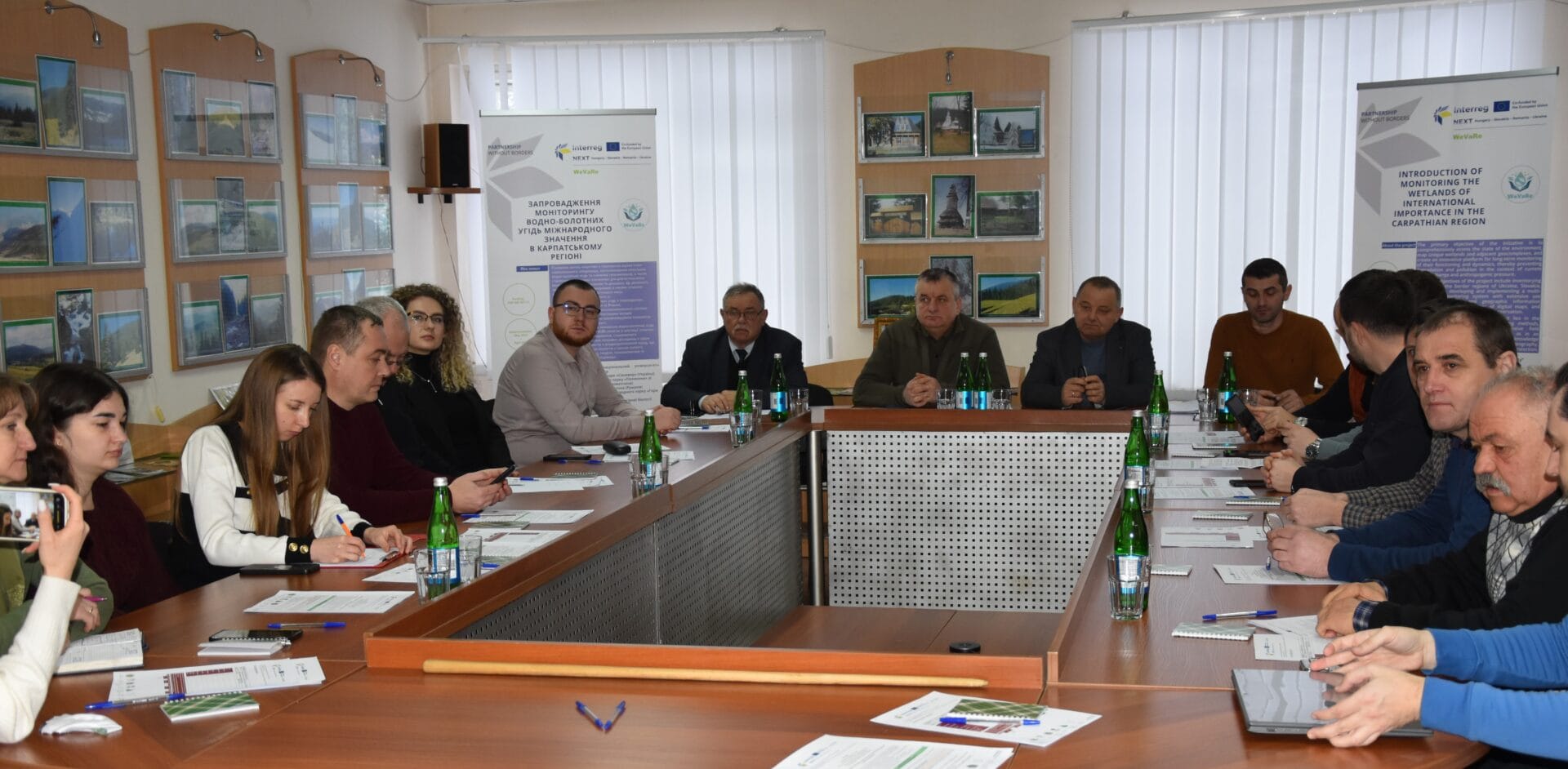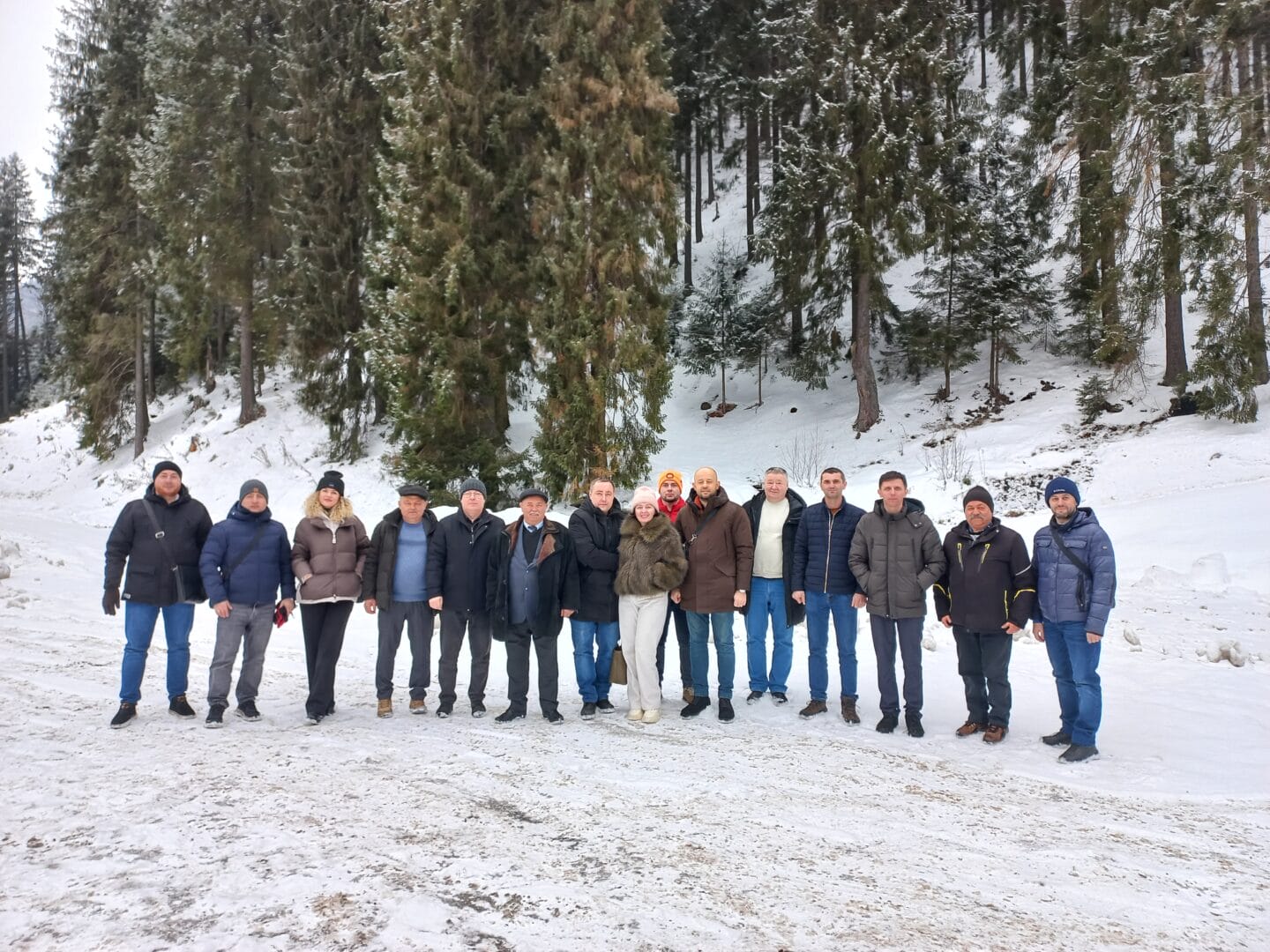
The Synevyr National Nature Park celebrated World Wetlands Day not just as a calendar date, but as the start of a new stage in nature conservation. An international seminar held on this significant day brought together scientists, experts, and ecologists from Ukraine, Slovakia, and Romania around an ambitious goal: the digitization of water resource protection in the Carpathian region. As part of the implementation of the international project “Introduction of monitoring of wetlands of international importance in the Carpathian region” (HUSKROUA/23/RS/1.2/036 – VeVaRe), funded with the support of the EU, the Synevyr National Nature Park became the center of international environmental dialogue. An international seminar dedicated to one of the most pressing issues of our time, “Wetlands as objects of environmental conservation: current challenges in the context of climate change,” was held at the Synevyr National Nature Park visitor center.
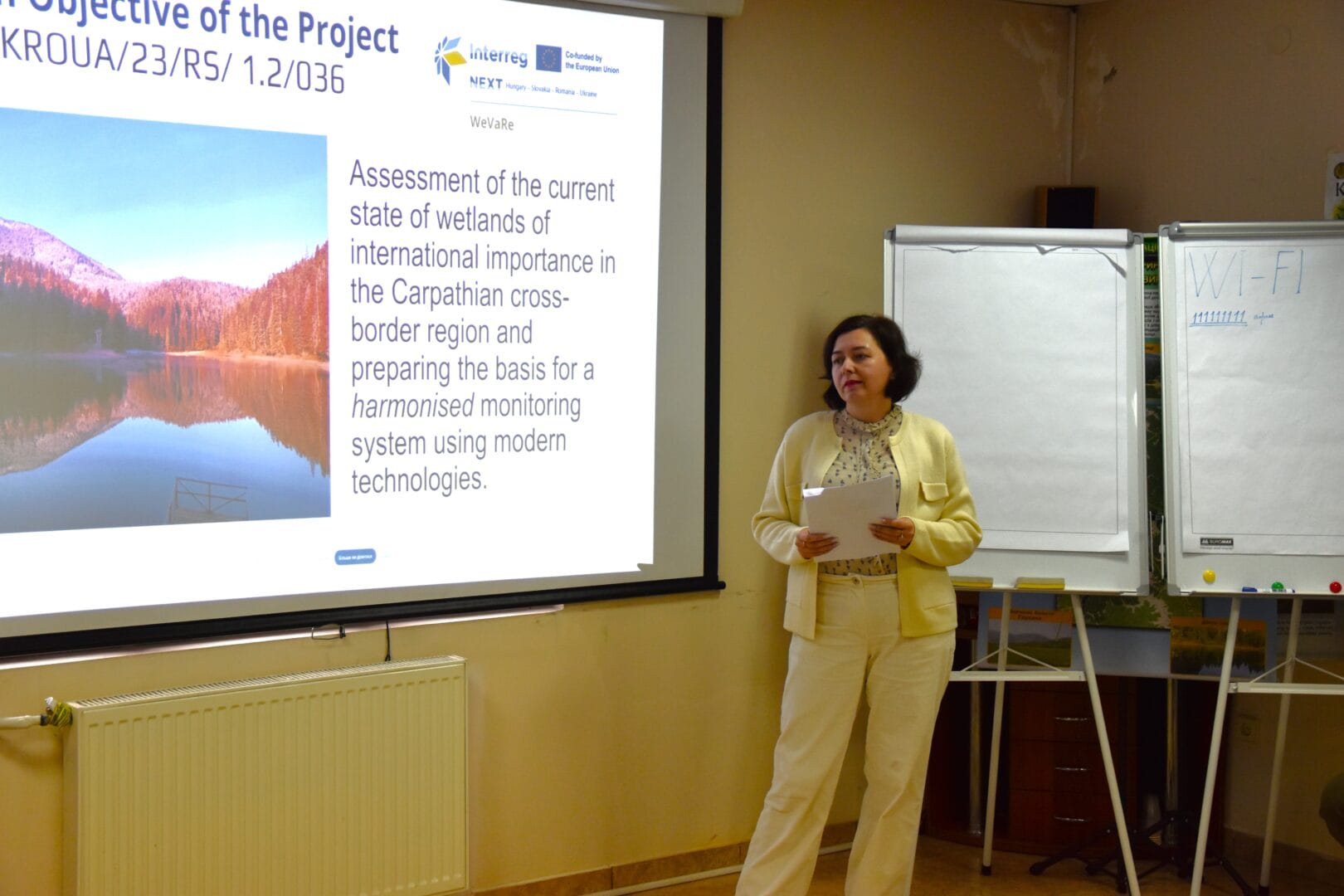
The main purpose of the meeting was to present an innovative system for monitoring wetlands of international importance in the Carpathian transboundary region and to prepare the basis for a harmonized monitoring system using modern technologies. The event was a key milestone in this project. The main innovation presented by the scientists proposes moving away from outdated methods in favor of the digital transformation of nature conservation. The key elements being implemented are modern GIS tools that will facilitate the creation of detailed digital maps and databases.
It should be noted that the lead partner in this project is Uzhhorod National University (Ukraine). Other partners involved in its implementation are:
– Synevyr National Nature Park (Ukraine);
– Administration of the Poloniny National Park, headquartered in Stakchin (Slovakia);
– Technical University of Cluj-Napoca (Romania);
– NFA Romsilva – Administration of the Maramures Mountains National Park (Romania);
– Žilina University, Institute of High Mountain Biology (Slovakia).
Opening the event, Mykola Derbak, director of the Synevyr National Nature Park, congratulated everyone on World Wetlands Day and the successful seminar, emphasizing the strategic importance of the park as a site that preserves unique hydrological landmarks and biodiversity.
Project manager and deputy director of the park Vasyl Rosada presented a roadmap for the implementation of the initiative, stressing that success depends on a combination of science and practice. He noted that wetlands are often underestimated, although they act as natural filters and giant sponges that retain water. In the context of global warming, their role is becoming critical and extremely important for all life on Earth. Given the urgency of this issue and the need for improvement, this project is extremely important and necessary not only for the Synevyr National Nature Park but also for all interested parties and partners.
Key speakers at the event included:
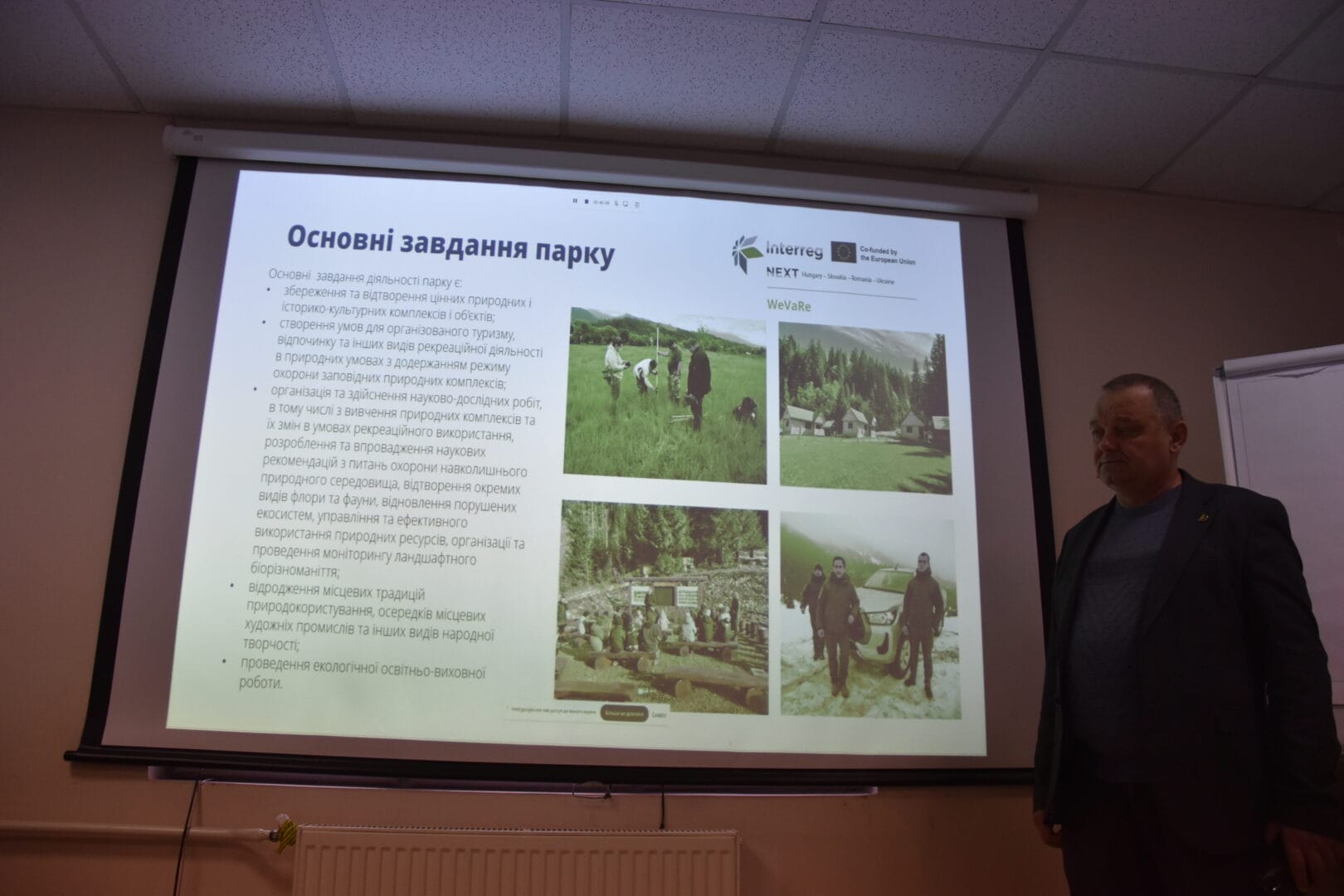
Yuriy Tyukh (Candidate of Biological Sciences, Head of the Scientific Department of the National Park, Executive Manager of the project from the Synevyr National Nature Park), who in his report focused the attention of the seminar participants on the role and main tasks of the Synevyr National Nature Park in preserving and increasing the biodiversity of the ecosystem. The report placed particular emphasis on the work carried out in the reporting period of 2025. As a result, we already have digital aerial photography, a large number of aerial photographs have been obtained, a digital terrain model and a high-resolution orthophoto plan have been created, which is an important basis for further geo-ecological monitoring and comprehensive research of the lake’s water area, coastal areas, and the catchment area as a whole.
Olesya Tragnyuk (representative of the Joint Secretariat of Hungary-Slovakia-Romania-Ukraine) emphasized the importance of cross-border cooperation for the sustainable development of the region. She drew the attention of those present to the ecological importance of this project and expressed her sincere gratitude to all partners for their close cooperation in its implementation.
Professor Natalia Kablak (project coordinator, UzhNU) revealed the scientific component and the role of university science in the implementation of innovations.
Professor Ivan Kalinich (dean of the Faculty of Geography, UzhNU) and Dmytro Tomenchuk, representative of the Department of Ecology and Natural Resources of the Transcarpathian Regional State Administration, discussed the issues of rational nature management and further support for the project team in its successful implementation.
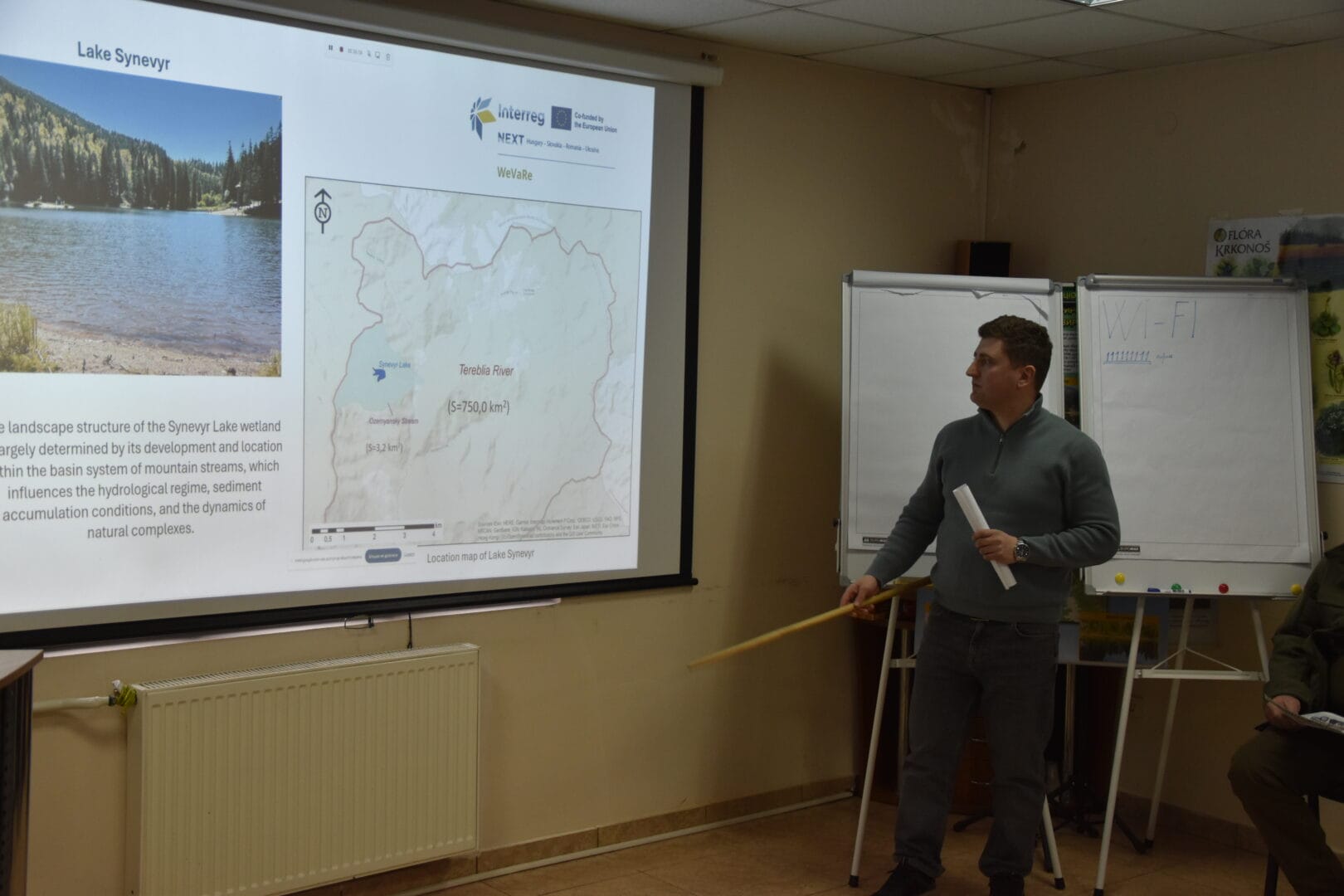
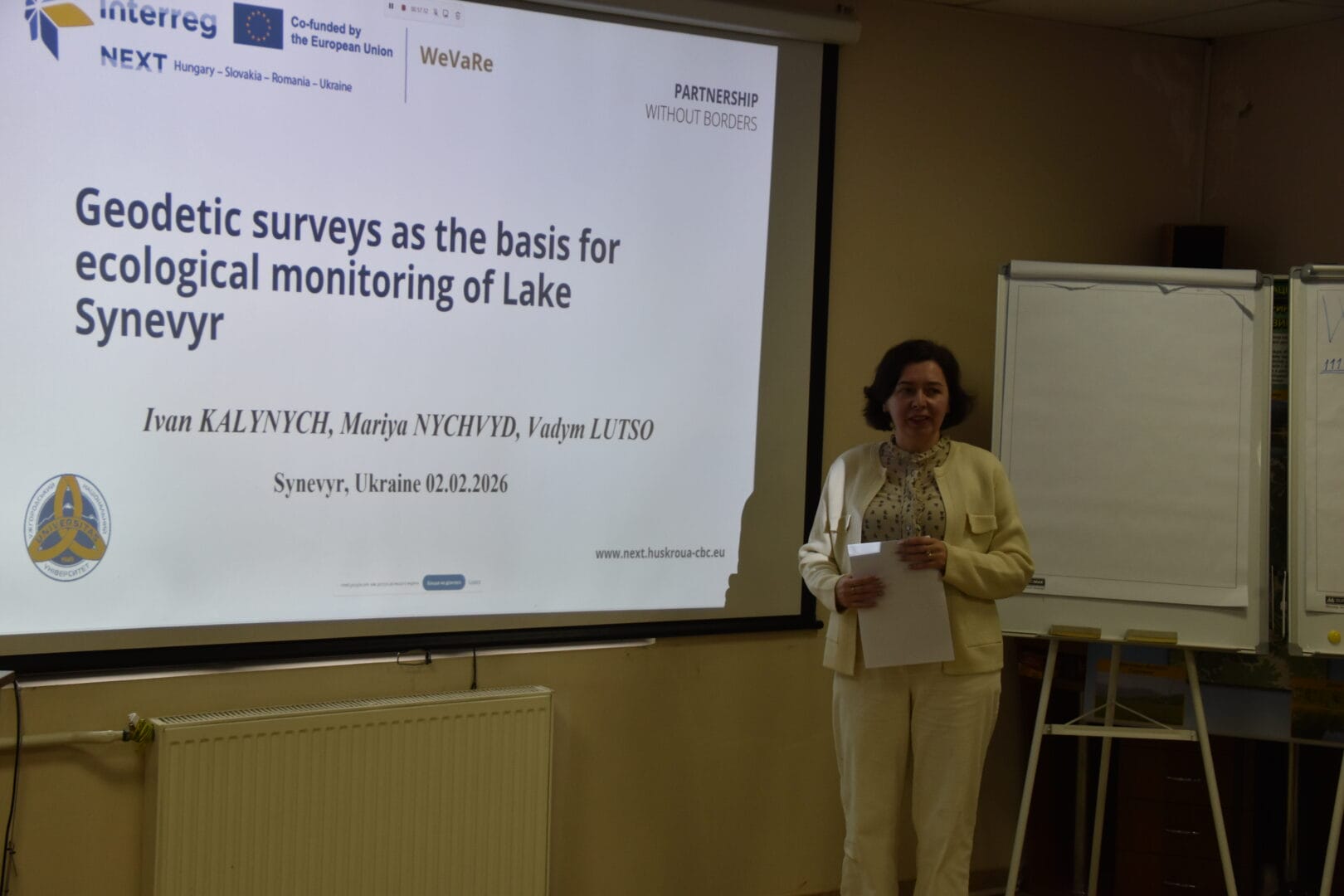
Maria Nychvid (senior lecturer at the Department of Land Management and Cadastre of the Faculty of Geography of UzhNU) in her speech analyzed in detail the total area of the studied territory, which is 15.4655 hectares, of which the water surface area of Lake Synevyr is 5.9418 hectares. She provided the audience with information about the surveys conducted, namely, mapping parameters, echo sounding, reconnaissance of the research area, etc.
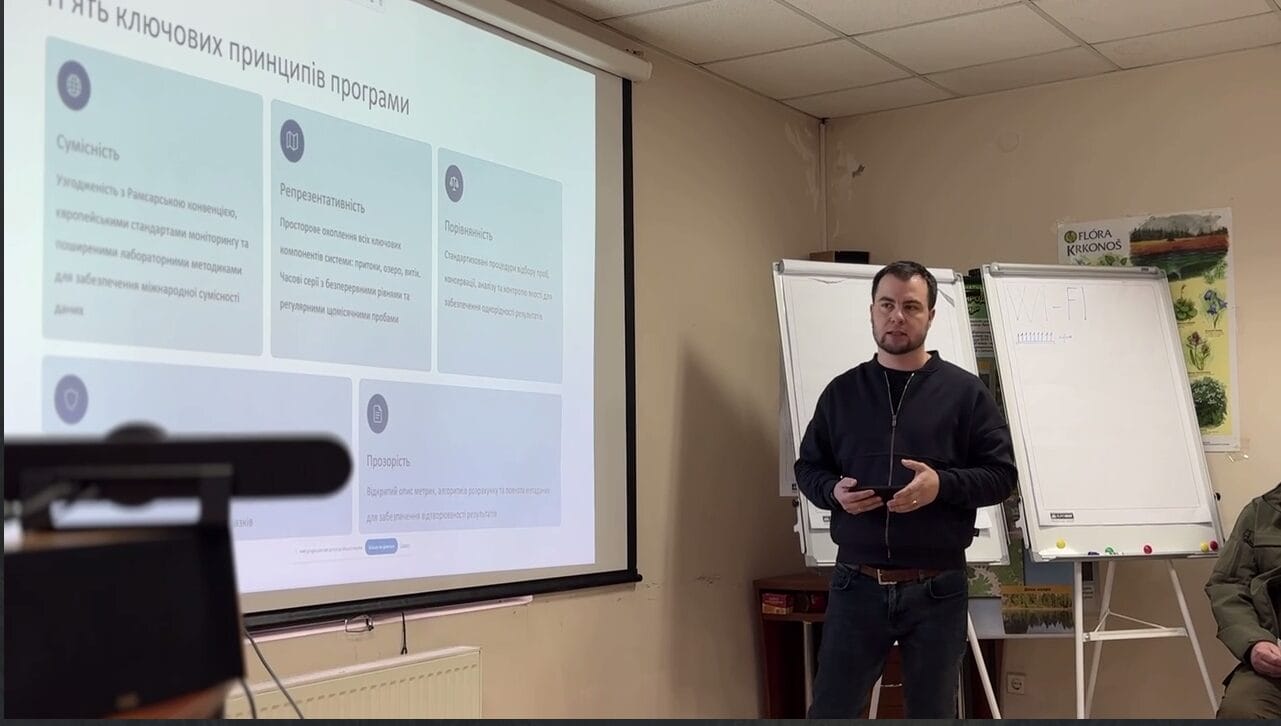
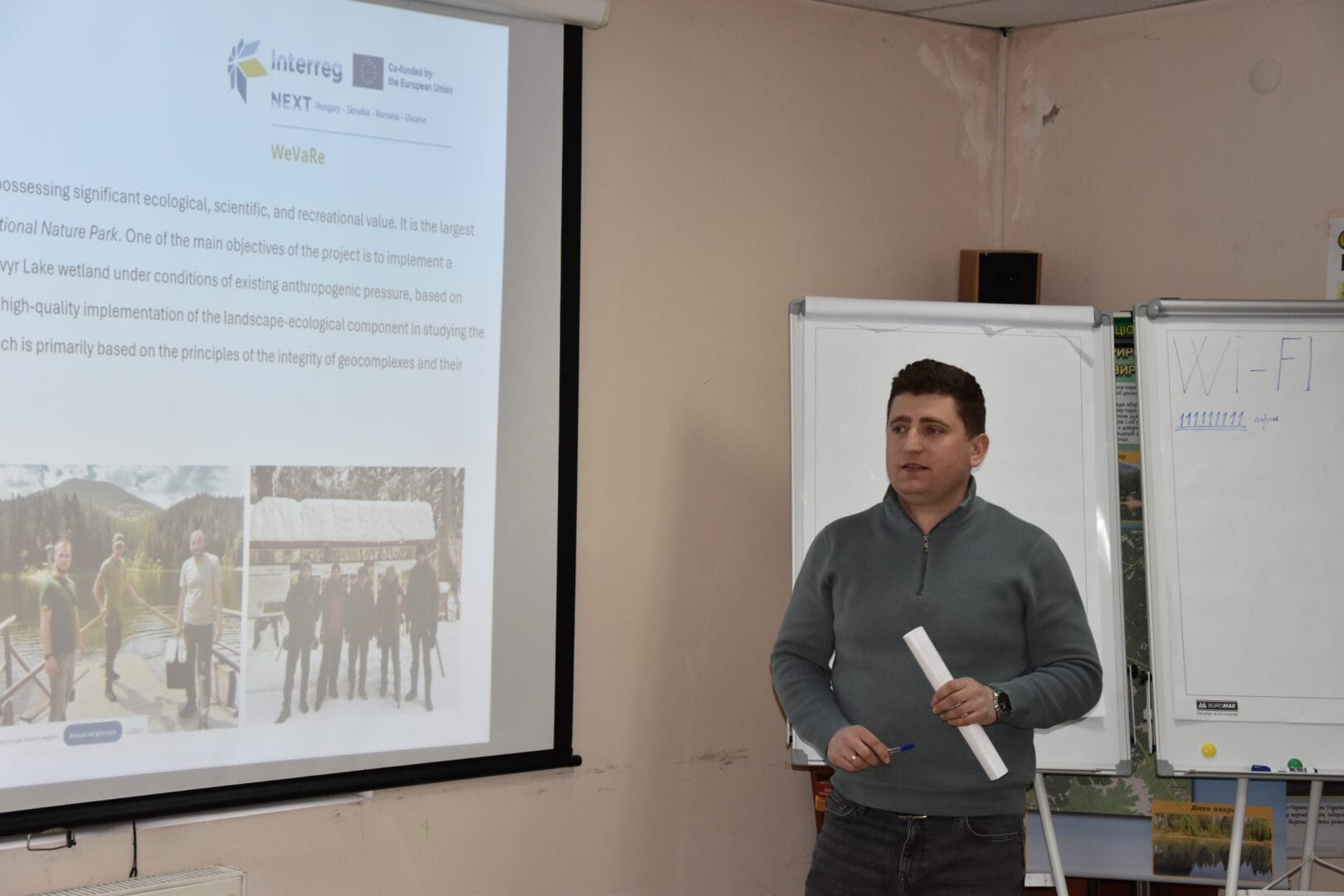
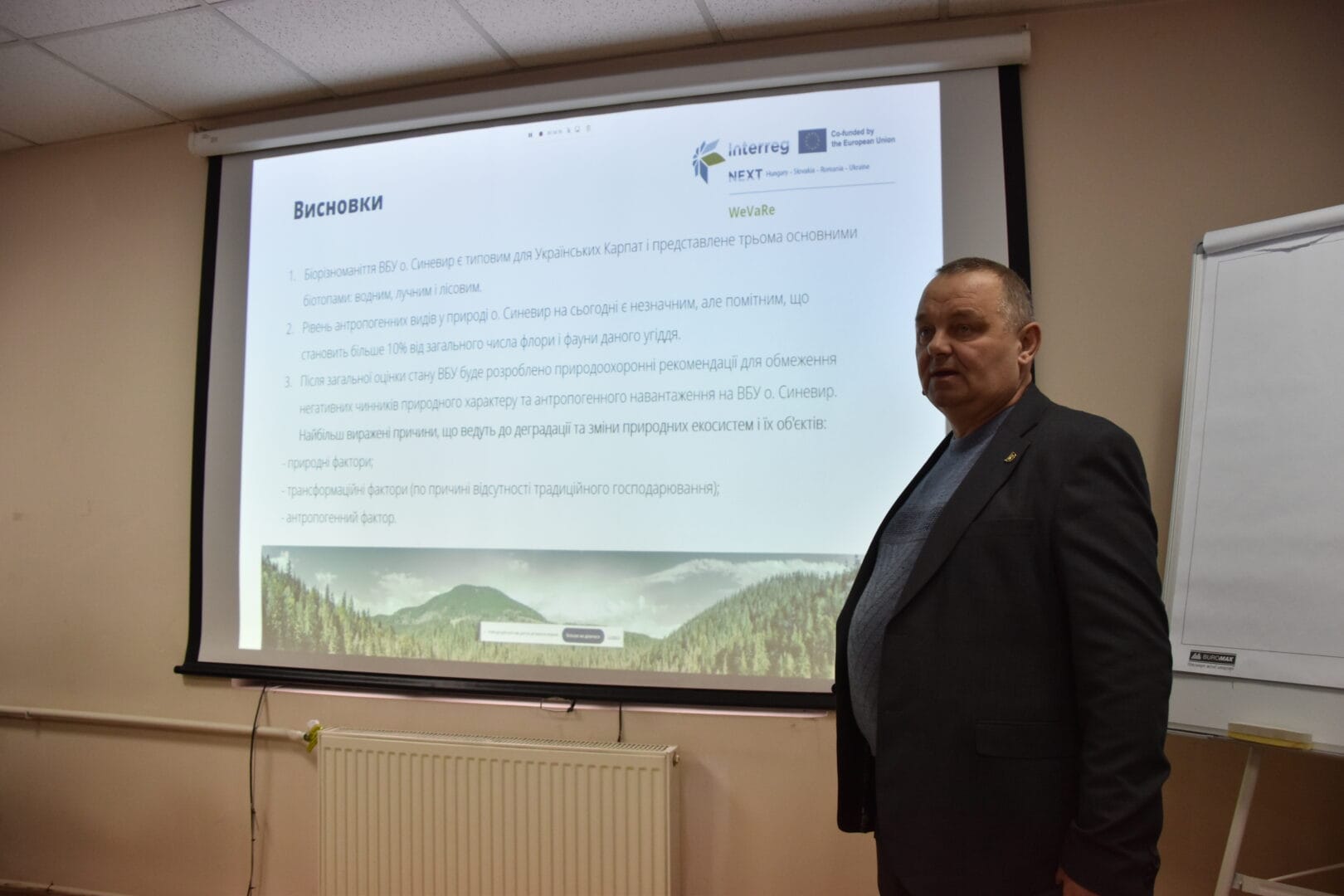
Mykola Karabinyuk and Vasyl Leta (scientists from UzhNU) focused their attention on the implementation of a comprehensive system for monitoring and preventing pollution of the wetlands of Lake Synevyr in conditions of existing anthropogenic pressure based on modern technologies and practices. Demonstrating slides of the work carried out during the reporting period, they drew attention to the fact that the survey and study of wetlands is an extremely necessary and important factor in their conservation, and that the planned work on mapping, analyzing the natural conditions of the territory, landscape and ecological diversity, determining anthropogenic impact, and developing recommendations for monitoring and preserving the wetland ecosystem as a whole.
Volodymyr Shushnyak (expert in meteorology, hydrometry, and exogenous processes) presented data on the impact of climate change on the water regime not only of the region but also of individual European countries.
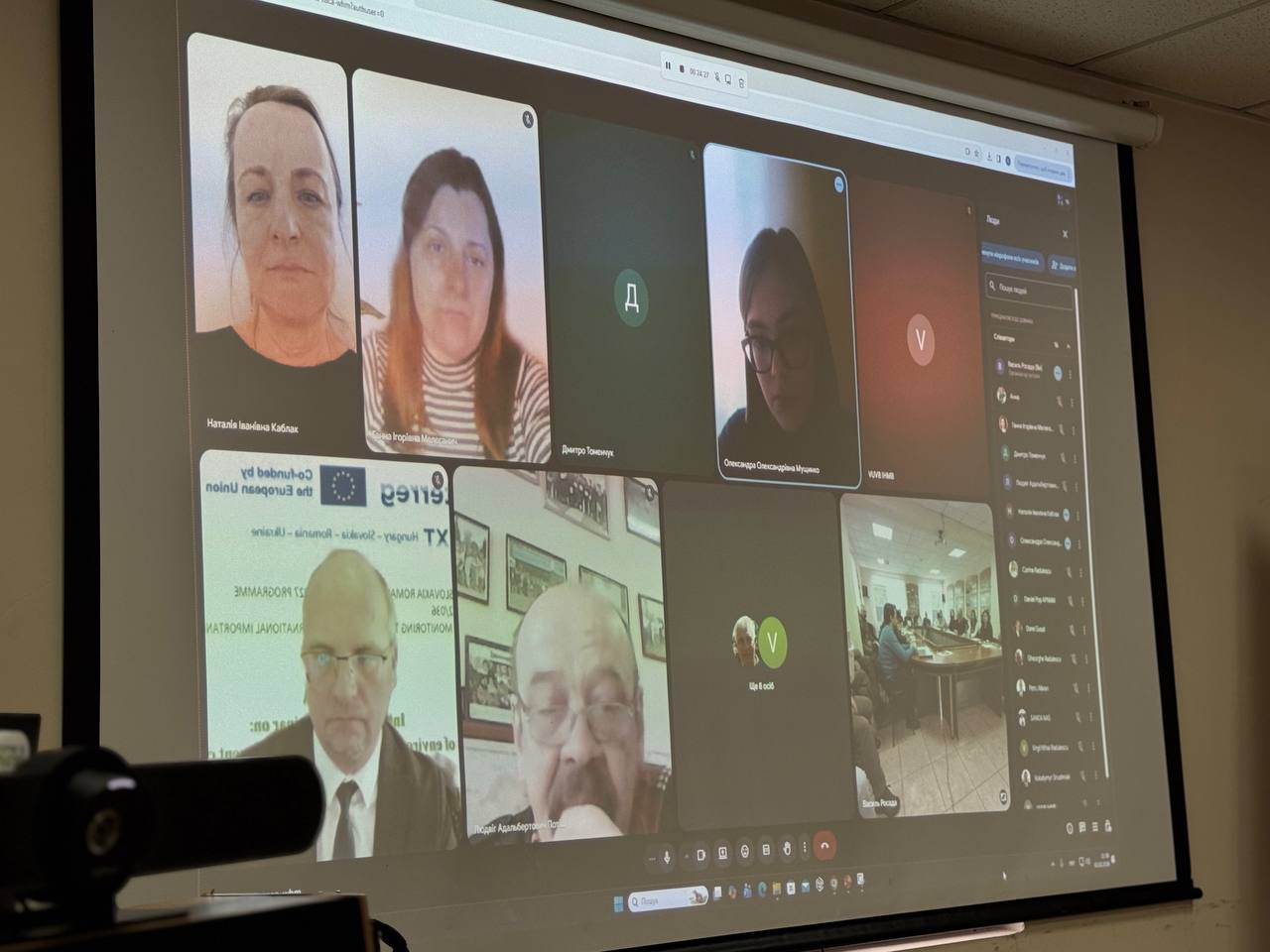
In the second part of the online seminar, partners from Romania and Slovakia gave their presentations. The topics of the presentations were as follows:
- “Monitoring snow cover characteristics in selected wetland ecosystems.” – Eng. Vasile CHOLPAN, Eng. Onut TOMOGA, Maramures Mountains National Park Administration (Romania)
- “Monitoring of wetlands in Maramures Natural Park using remote sensing and geospatial technologies” – Associate Professor, Doctor of Technical Sciences, Dorel Gusat, Technical University of Cluj-Napoca (Romania)
- “The role of wetland monitoring results in the development of management plan measures” – Eng. Daniel POP, project manager from the Maramures Mountains National Park Administration (Romania)
- Presentation of the Faculty of Civil Engineering and the Department of Land Surveying (Technical University of Cluj-Napoca, Romania) – Associate Professor, Doctor of Technical Sciences Virgil Mihai RADULESCU, Technical University of Cluj-Napoca (Romania)
- “Scientific activity at the Institute of High Mountain Biology” – Mgr. Lenka ZABOJNIKOVA, Research Institute of High Mountain Biology, University of Žilina in Žilina (Slovakia)
- “Preliminary results of hydrological and ecotoxicological studies in Stinska Slatina” – Mgr. Lenka ZABOJNIKOVA, Research Institute of High Mountain Biology, University of Žilina in Žilina (Slovakia)
- “Introduction of wetland monitoring in the Polonyny National Park” (video presentation) – Ing. Dominika KUSINOVA, Administration of the Polonyny National Park in Stakchin (Slovakia)
“Wetlands are not just swamps or peat bogs. They are natural filters and climate regulators. In the context of global warming, their protection becomes a matter of national security,” experts noted during their presentations.
Seminar participants highlighted the threats posed by climate change, ranging from droughts to the degradation of unique flora and fauna habitats. The seminar served as a platform not only for sharing experiences, but also for planning joint actions. Key pilot sites representing different types of mountain wetlands were discussed, including Lake Synevyr and surrounding landscape units in Ukraine, the Stynska Slatina wetlands in the Poloniny National Park in Slovakia, and selected wetlands in the Maramures Mountains Nature Park in Romania.
As a result of the meeting, scientists agreed on plans for the further implementation of automated monitoring systems and the strengthening of partnerships between scientific institutions and nature conservation agencies.